
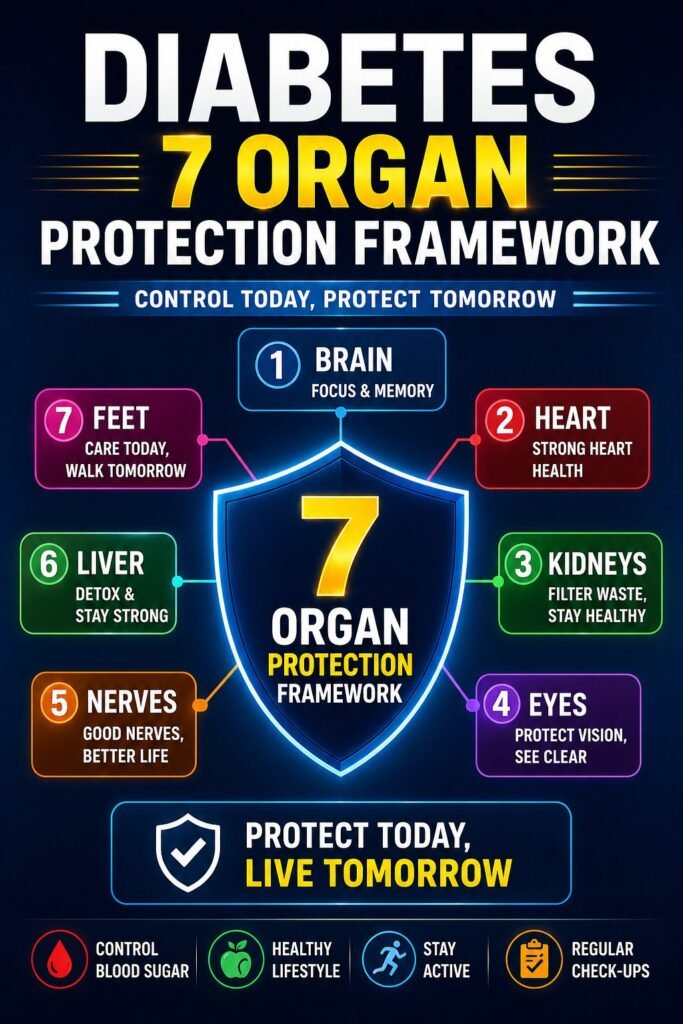
The 7 Organ Protection Framework™
The Complete Guide to Protecting Your Heart, Kidneys, Eyes, Brain, Liver, Nerves and Feet Before Diabetes Causes Permanent Damage
A Story Worth Ten Thousand Warnings
He was 44. He walked five kilometers most mornings. He felt fine.
His HbA1c had sat at 7.2% for three years — “under control,” his reports said. He took his metformin. He skipped most of his annual checkups because, in his words, “nothing hurts.”
Then, on an ordinary Tuesday, he had a heart attack.
There was no chest-clutching warning scene from a movie. Just tightness he mistook for acidity, and a cardiologist later showing him an angiogram with three blocked vessels — damage that had almost certainly been building for years.
His blood sugar numbers looked “manageable.” His heart did not agree.
This is the story that repeats — with different organs, different ages, different countries — in clinics everywhere. Diabetes rarely announces the damage it’s doing. It works silently, years before the first symptom, in blood vessels and nerves too small to notice and too important to ignore.
That single fact is the reason this guide exists, and it is the foundation of everything in it:
The central philosophy: “Protect organs — not just blood sugar.”
HbA1c is a single number. Your body has seven vulnerable organ systems. A guide that only talks about sugar control is only telling part of the story. This is the rest of it.
Executive Summary (5-Minute Read)
- Diabetes is not a “blood sugar disease” — it is a whole-body vascular and metabolic condition that can affect the heart, kidneys, eyes, brain, nerves, feet, and liver, often silently, years before diagnosis or symptoms appear.
- Organ damage frequently begins in prediabetes — long before a formal diabetes diagnosis.
- A normal or “good” HbA1c does not guarantee organ safety. Blood pressure, cholesterol, weight, sleep, smoking, and inflammation all independently damage organs.
- Each organ has its own warning signs, its own tests, and its own prevention checklist — this guide gives you all seven.
- Annual, structured screening is one of the most effective and least expensive tools in all of medicine for catching damage while it is still reversible or manageable.
- Small, consistent daily behaviors — not extreme diets or willpower — are what actually protect organs over decades.
- This guide introduces a practical way to think about organ risk holistically, without needing to become a medical expert yourself.
What You’ll Learn
By the end of this guide, you will be able to:
- Explain why diabetes is a whole-body disease, not just a “sugar problem”
- Identify the early warning signs for all seven vulnerable organs
- Know exactly which tests matter, how often to get them, and what the results mean
- Recognize the risk factors that accelerate organ damage — and which ones you can change
- Use practical, India-relevant food swaps that protect specific organs
- Understand which daily behaviors matter most for each organ
- Avoid the most common mistakes patients (and sometimes clinics) make
- Know exactly what to ask your doctor at your next visit
- Understand how prediabetes can already be quietly damaging organs
- Build a lifetime roadmap for organ protection, decade by decade
Why This Guide Matters
Diabetes has become one of the defining health challenges of our era. Globally, hundreds of millions of adults live with diabetes, and a comparable number live with prediabetes — many without knowing it. India alone carries one of the largest diabetes populations in the world, alongside a fast-rising burden of prediabetes in urban and increasingly rural populations.
What connects almost every serious outcome in diabetes — heart attacks, kidney failure, blindness, amputations, cognitive decline — is not diabetes itself. It’s undetected, unmanaged organ damage that accumulated over years while blood sugar numbers looked “fine enough.”
The encouraging truth: most of this damage is detectable early and substantially preventable. The tools are not exotic. They are inexpensive tests, well-understood lifestyle changes, and — most importantly — knowing where to look and when.
That is what this guide gives you.
Diabetes Is a Whole-Body Disease
Blood sugar doesn’t just sit in the bloodstream — it circulates through every organ, every minute, every day. When glucose levels run high over time, several things happen simultaneously throughout the body:
- Blood vessels — especially the smallest ones (microvascular) — become stiffer and more prone to injury
- Nerves lose their protective coating and communication ability
- Inflammation rises throughout the body, accelerating wear on organ tissue
- Fat accumulates in places it shouldn’t, especially the liver
- Blood pressure and cholesterol patterns shift, compounding vascular stress
This is why a person with diabetes is simultaneously at higher risk for a heart attack, kidney disease, vision loss, nerve damage, foot ulcers, liver disease, and cognitive decline — not because these are separate coincidences, but because they share the same root mechanism: chronic vascular and metabolic stress.
Clinical Pearl: Doctors often describe diabetes as “a disease of small blood vessels wearing out big organs.” The kidneys, retina, and nerves are especially vulnerable because they depend on extremely fine capillary networks.
The 7 Organ Protection Framework™
| Organ | Primary Risk | Silent Damage Window | Key Test |
| ❤️ Heart | Heart attack, stroke | Years to decades | Blood pressure, lipid profile |
| Kidneys | Chronic kidney disease | 5–10 years | Urine ACR, eGFR |
| Eyes | Diabetic retinopathy, vision loss | 3–7 years | Dilated retinal exam |
| ⚡ Nerves | Diabetic neuropathy | 5–10 years | Monofilament / vibration test |
| Feet | Ulcers, amputation | Often follows nerve damage | Comprehensive foot exam |
| Liver | Fatty liver, fibrosis | 10–20 years | Liver enzymes, fibrosis screening |
| Brain | Cognitive decline | Decades | Cognitive screening, vascular risk review |
Each organ gets its own deep-dive section below, using the same structure so you can navigate quickly to what matters most to you.
❤️ HEART: Protecting Your Cardiovascular System
Why It Matters
Cardiovascular disease is the leading cause of death in people with diabetes — more than any other single complication. The heart and blood vessels are affected earlier and more aggressively than most people realize.
How Diabetes Affects It
High blood sugar damages the inner lining of blood vessels (the endothelium), making them stiffer and more prone to plaque buildup. Diabetes also commonly travels with high blood pressure and unhealthy cholesterol patterns — a combination that compounds risk far beyond what any single factor would cause alone.
Early Warning Signs
- Unusual fatigue with normal activity
- Shortness of breath during mild exertion
- Chest discomfort, pressure, or tightness (may be mild or absent — “silent” heart disease is common in diabetes)
- Swelling in the ankles or legs
- Irregular heartbeat sensations
Did You Know? People with diabetes can have heart attacks with little or no chest pain due to nerve damage affecting pain signals. This is why symptom-based awareness alone is not enough — screening matters more.
Risk Factors
Prediabetes • Hypertension • Smoking • Obesity (especially abdominal) • High LDL cholesterol • Fatty liver • Poor sleep • Physical inactivity • Family history of heart disease • Chronic stress
Tests That Matter
| Test | Purpose | Typical Frequency |
| Blood pressure | Detects hypertension, a major heart-damage accelerant | Every visit |
| Lipid profile (LDL, HDL, triglycerides) | Assesses plaque-forming risk | Annually, or as advised |
| HbA1c | Reflects average glucose exposure | Every 3–6 months |
| ECG | Screens for heart rhythm/structural issues | As advised by physician |
| Waist circumference | Marker of visceral fat and cardiometabolic risk | Every visit |
Prevention Strategies
- Nutrition: reduce refined carbohydrates and trans fats, prioritize fiber and healthy fats
- Regular aerobic activity (brisk walking, cycling, swimming) most days of the week
- Sustainable weight management, especially reducing abdominal fat
- Prioritizing 7–8 hours of quality sleep
- Stress management practices (breathing exercises, routine, social connection)
- Strict medication adherence for blood pressure and cholesterol if prescribed
- Complete smoking cessation
- Regular cardiology follow-up if risk factors are present
Food Swap Intelligence™ — Heart Edition
| Instead of | Swap to | Why |
| Deep-fried snacks (samosa, pakora) | Roasted chana, air-fried options | Reduces trans fat load |
| Refined white rice, daily | Mixed millets, brown rice (portioned) | Lower glycemic impact |
| Ghee/butter in excess | Measured mustard/olive oil | Better fat profile |
| Sweetened tea/coffee, multiple times/day | Unsweetened or minimally sweetened, 1–2x/day | Reduces added sugar load |
| Processed namkeen | Roasted nuts (small portion) | Less sodium, healthier fats |
Behaviour Intelligence™
The single behavior most correlated with heart protection isn’t diet perfection — it’s consistency of daily movement. Even 20–30 minutes of brisk walking most days measurably improves blood pressure and lipid patterns over months.
Common Mistakes
- Assuming normal HbA1c means the heart is safe
- Ignoring mild breathlessness as “just being unfit”
- Stopping blood pressure or cholesterol medication once feeling “fine”
- Treating cardiovascular risk and diabetes as separate conditions
Questions to Ask Your Doctor
- “Based on my full profile, what is my cardiovascular risk category?”
- “Should I be on medication to protect my heart, even if my cholesterol looks borderline?”
- “What blood pressure target is right for me specifically?”
Quick Action Checklist
- [ ] Blood pressure checked this visit
- [ ] Lipid profile within the last 12 months
- [ ] 150+ minutes of moderate activity this week
- [ ] No tobacco use
- [ ] Sleep reviewed with your doctor if poor
Key Takeaways
Heart risk in diabetes builds silently and often outpaces sugar-focused management alone. Blood pressure and cholesterol control are just as important as glucose control — sometimes more.
KIDNEYS: Protecting Your Filtration System
Why It Matters
Diabetic kidney disease is one of the leading causes of kidney failure worldwide. The kidneys can lose significant function — sometimes over 50% — before any symptoms appear.
How Diabetes Affects It
The kidneys are essentially made of millions of microscopic filters (nephrons) supplied by tiny blood vessels. Chronic high blood sugar and high blood pressure damage these delicate filters, causing them to either leak protein (an early sign) or gradually lose filtering capacity.
Early Warning Signs
- Foamy or bubbly urine (possible protein leakage)
- Swelling in the ankles, feet, or around the eyes
- Fatigue, poor appetite
- Difficulty concentrating
- Rising blood pressure that’s harder to control
Clinical Pearl: Early diabetic kidney disease is almost always symptom-free. By the time swelling or fatigue appears, meaningful kidney function may already be lost. This is why the urine ACR test matters more than symptoms.
Risk Factors
Long-standing hyperglycemia • Uncontrolled hypertension • Smoking • Obesity • Family history of kidney disease • Recurrent urinary tract infections • Overuse of certain painkillers (NSAIDs) • High-protein/high-sodium diets without medical guidance
Tests That Matter
| Test | Purpose | Typical Frequency |
| Urine Albumin-Creatinine Ratio (ACR) | Detects early protein leakage — the earliest kidney warning sign | Annually |
| Serum creatinine + eGFR | Estimates overall kidney filtering function | Annually, or more often if abnormal |
| Blood pressure | Kidney damage and hypertension worsen each other | Every visit |
| Electrolyte panel | Assesses broader kidney function | As advised |
Prevention Strategies
- Blood pressure control is arguably the single most protective factor for kidneys
- Moderate, medically-guided protein intake (not excessive, not deficient)
- Adequate hydration without overcorrection
- Avoiding unsupervised, frequent NSAID painkiller use
- Managing blood sugar within individualized targets
- Reducing sodium intake
- Annual screening even with zero symptoms
Food Swap Intelligence™ — Kidney Edition
| Instead of | Swap to | Why |
| High-sodium pickles, papad daily | Fresh herbs, lemon, limited pickle portions | Reduces sodium-driven blood pressure strain |
| Excess red meat/processed meat | Dal, paneer, fish (moderate portions) | Gentler on kidney filtration load |
| Packaged soups, instant noodles | Home-made, low-sodium alternatives | Cuts hidden sodium |
| Cola and packaged sugary drinks | Water, buttermilk (unsalted or lightly salted) | Reduces metabolic and sodium burden |
Behaviour Intelligence™
Patients who bring their blood pressure readings consistently under control show meaningfully slower kidney function decline than those focused on glucose alone. Blood pressure control is kidney protection.
Common Mistakes
- Skipping urine ACR because “creatinine was normal”
- Assuming no swelling means no kidney issue
- Self-medicating with painkillers for chronic joint pain
- Reducing water intake drastically based on myths, without medical guidance
Questions to Ask Your Doctor
- “Has my urine ACR been tested this year?”
- “What is my current eGFR, and has it changed from last year?”
- “Do I need a nephrology referral based on my results?”
Quick Action Checklist
- [ ] Urine ACR tested in the last 12 months
- [ ] eGFR and creatinine tested
- [ ] Blood pressure under discussed target
- [ ] No unsupervised NSAID use
- [ ] Sodium intake reviewed
Key Takeaways
Kidney disease in diabetes is silent, common, and highly preventable with two things: consistent blood pressure control and annual urine ACR testing — regardless of how you feel.
EYES: Protecting Your Vision
Why It Matters
Diabetic retinopathy is one of the leading causes of preventable blindness in working-age adults. Vision loss from diabetes is largely preventable — but only with early detection.
How Diabetes Affects It
The retina depends on extremely fine blood vessels. High blood sugar over time can cause these vessels to weaken, leak, or grow abnormally — all of which can occur with zero visual symptoms until damage is advanced.
Early Warning Signs
- Blurred or fluctuating vision
- Dark spots or “floaters”
- Difficulty seeing at night
- Colors appearing faded
- Sudden vision changes (seek urgent care)
Myth vs Fact Myth: “If my vision is fine, my eyes are fine.” Fact: Diabetic retinopathy is frequently present with no noticeable vision change in its early and even moderate stages. Only a dilated exam can detect it reliably.
Risk Factors
Duration of diabetes • Poor long-term glucose control • Hypertension • High cholesterol • Pregnancy in women with diabetes • Smoking
Tests That Matter
| Test | Purpose | Typical Frequency |
| Dilated retinal examination | Direct visualization of retinal blood vessels | Annually, or as advised |
| Retinal photography/OCT | Detailed imaging for early changes | As advised by ophthalmologist |
| Blood pressure & HbA1c review | Systemic risk contributors | Alongside eye visits |
Prevention Strategies
- Annual dilated eye exams regardless of symptoms
- Blood pressure and cholesterol management
- Stable glucose control over time (avoiding large swings)
- Immediate reporting of sudden visual changes
- Extra vigilance during pregnancy if diabetes is present
Behaviour Intelligence™
The most protective single habit here isn’t a diet change — it’s calendar discipline: booking and keeping the annual dilated eye exam even when vision feels completely normal.
Common Mistakes
- Skipping eye exams because “I can see fine”
- Relying only on a basic vision/refraction test instead of a dilated exam
- Ignoring sudden floaters or vision changes, assuming they’ll pass
Questions to Ask Your Doctor
- “When was my last dilated retinal exam, and when is the next one due?”
- “Are there early changes in my retina I should know about?”
- “Does my blood pressure or cholesterol need tighter control to protect my eyes?”
Quick Action Checklist
- [ ] Dilated eye exam within the last 12 months
- [ ] No unreported vision changes
- [ ] Blood pressure and lipids reviewed
Key Takeaways
Vision-related diabetes damage is largely silent and highly treatable when caught early — but nearly irreversible once advanced. The annual dilated exam is non-negotiable.
⚡ NERVES: Protecting Your Nervous System
Why It Matters
Diabetic neuropathy is one of the most common — and most under-recognized — complications. It sets the stage for foot ulcers, falls, and reduced quality of life.
How Diabetes Affects It
Prolonged high blood sugar damages the protective coating of nerves and the tiny blood vessels that supply them, most often starting in the feet and hands (“stocking-glove” pattern) before progressing elsewhere.
Early Warning Signs
- Tingling, “pins and needles,” or numbness in the feet or hands
- Burning pain, especially at night
- Reduced sensation to temperature or touch
- Muscle weakness
- Digestive changes (bloating, altered bowel habits) — a sign of nerve involvement in the gut
- Dizziness on standing (may indicate autonomic nerve involvement)
Risk Factors
Long-standing hyperglycemia • Duration of diabetes • Smoking • Alcohol excess • Vitamin B12 deficiency • Obesity • Hypertension
Tests That Matter
| Test | Purpose | Typical Frequency |
| Monofilament test | Checks protective sensation in feet | Annually |
| Vibration perception test | Detects early nerve fiber changes | Annually |
| Reflex testing | Assesses nerve conduction indirectly | Annually |
| Vitamin B12 level | Rules out a reversible contributor | As advised |
Prevention Strategies
- Consistent glucose control over time
- Daily foot inspection (see Foot section below)
- Correcting B12 deficiency if present
- Limiting alcohol
- Managing blood pressure and lipids
Behaviour Intelligence™
Most nerve damage progresses gradually and painlessly at first. The behavior that catches it earliest isn’t a dramatic lifestyle change — it’s a 60-second daily foot and sensation check.
Common Mistakes
- Dismissing tingling as “just circulation” or aging
- Not reporting digestive or dizziness symptoms as possibly nerve-related
- Waiting for pain before seeking evaluation (numbness is often the more dangerous sign, since it hides injury)
Questions to Ask Your Doctor
- “Have I had a monofilament or vibration test for my feet this year?”
- “Could my digestive symptoms or dizziness be related to nerve involvement?”
- “Should my B12 levels be checked?”
Quick Action Checklist
- [ ] Annual monofilament/vibration testing done
- [ ] No unreported tingling, numbness, or burning
- [ ] B12 level checked if on metformin long-term
Key Takeaways
Numbness is often more dangerous than pain because it hides injury. Nerve screening should happen every year, not just when symptoms appear.
FEET: Protecting Mobility and Independence
Why It Matters
Foot complications are among the most preventable — yet most feared — outcomes of diabetes. Most amputations are preceded by an ulcer that could have been caught and treated early.
How Diabetes Affects It
Reduced sensation (from nerve damage) combined with reduced blood flow (from vascular damage) means small injuries can go unnoticed and heal poorly — turning a minor cut into a serious wound.
Early Warning Signs
- Cuts, blisters, or sores that heal slowly
- Numbness or reduced sensation
- Changes in foot shape or color
- Persistent dryness or cracking, especially heels
- Ingrown toenails or fungal infections that recur
Risk Factors
Neuropathy • Peripheral vascular disease • Poor footwear • Smoking • Poorly controlled glucose • Previous foot ulcer or amputation • Visual impairment (missing early signs)
Tests That Matter
| Test | Purpose | Typical Frequency |
| Comprehensive foot exam | Screens for sensation, pulses, skin integrity, deformities | Annually (more often if high-risk) |
| Pulse check (dorsalis pedis, posterior tibial) | Assesses blood flow | Annually |
| Skin and nail inspection | Detects early infection risk | Every visit |
Prevention Strategies
- Daily self-inspection of both feet (use a mirror if needed)
- Proper, well-fitted footwear — never barefoot walking
- Prompt attention to any cut, blister, or discoloration
- Regular professional foot care, especially for calluses/nails
- Smoking cessation (critical for blood flow)
- Annual professional foot exam, even without symptoms
Behaviour Intelligence™
The protective habit here is almost embarrassingly simple: look at the soles of your feet every single day. Most serious foot complications trace back to an injury that went unnoticed for days or weeks.
Common Mistakes
- Walking barefoot at home
- Ignoring “small” cuts or blisters
- Cutting corns/calluses yourself with sharp instruments
- Wearing tight or ill-fitting footwear for convenience
Questions to Ask Your Doctor
- “Am I currently classified as low, medium, or high risk for foot complications?”
- “Should I be seeing a podiatrist regularly?”
- “Is my footwear appropriate for my risk level?”
Quick Action Checklist
- [ ] Daily foot self-check
- [ ] Annual professional foot exam
- [ ] Well-fitted, closed footwear worn consistently
- [ ] Any wound reported within 24 hours, not “watched” for weeks
Key Takeaways
Foot complications are almost always preventable when caught in the “small cut” stage. The daily 60-second look is the cheapest, most effective tool in this entire guide.
LIVER: Protecting Your Metabolic Engine
Why It Matters
Fatty liver disease (now often termed metabolic dysfunction-associated steatotic liver disease) is extremely common in people with type 2 diabetes and prediabetes — and it frequently goes undiagnosed for years.
How Diabetes Affects It
Insulin resistance — the core driver of type 2 diabetes — promotes fat accumulation in liver cells. Over years, this can progress from simple fatty liver to inflammation (steatohepatitis) and, in some cases, scarring (fibrosis).
Early Warning Signs
Fatty liver disease is usually silent until advanced. Occasional signs include:
- Mild right upper abdominal discomfort
- Persistent fatigue
- Unexplained mildly elevated liver enzymes on routine blood work
Risk Factors
Insulin resistance/prediabetes • Obesity, especially abdominal • High triglycerides • Sedentary lifestyle • Excess alcohol • Rapid weight fluctuations
Tests That Matter
| Test | Purpose | Typical Frequency |
| Liver enzymes (ALT, AST) | Screens for liver inflammation | Annually |
| Abdominal ultrasound | Detects fat accumulation | As advised |
| Fibrosis screening (e.g., specific scoring tools your doctor may use) | Assesses scarring risk in higher-risk patients | As advised |
| Lipid profile | Related metabolic risk marker | Annually |
Prevention Strategies
- Gradual, sustainable weight reduction (even 5–10% body weight can meaningfully reduce liver fat)
- Reducing refined sugar and ultra-processed food intake
- Regular physical activity, including strength training
- Limiting or eliminating alcohol
- Managing triglycerides and overall metabolic health
Food Swap Intelligence™ — Liver Edition
| Instead of | Swap to | Why |
| Sugary beverages, packaged juices | Water, whole fruit (in moderation) | Reduces fructose-driven liver fat |
| Refined flour (maida) products | Whole grains, millets | Lower glycemic and fat-storage impact |
| Deep-fried foods regularly | Baked, grilled, air-fried alternatives | Reduces liver fat accumulation |
| Frequent alcohol | Reduced or eliminated | Alcohol compounds liver fat risk |
Behaviour Intelligence™
Liver fat responds faster to lifestyle change than almost any other organ in this guide — meaningful improvement is often seen within months of consistent weight and activity changes, though individual results vary.
Common Mistakes
- Assuming liver enzymes being “normal” rules out fatty liver (it doesn’t always)
- Ignoring fatty liver as a “minor” incidental ultrasound finding
- Not connecting liver health to overall diabetes risk
Questions to Ask Your Doctor
- “Do I show any signs of fatty liver, and has it been screened?”
- “Should I get an ultrasound or fibrosis assessment?”
- “How does my liver health affect my overall diabetes risk?”
Quick Action Checklist
- [ ] Liver enzymes checked in the last 12 months
- [ ] Ultrasound done if previously flagged or high-risk
- [ ] Alcohol intake reviewed with your doctor
- [ ] Weight and activity plan in place
Key Takeaways
Fatty liver and diabetes fuel each other. It’s one of the most under-discussed organ risks — and one of the most responsive to lifestyle change.
BRAIN: Protecting Cognitive Health
Why It Matters
Diabetes is associated with an increased long-term risk of cognitive decline. This is one of the least-discussed organ risks — and one of the most important for long-term independence and quality of life.
How Diabetes Affects It
The brain relies on a dense network of small blood vessels, similar to the kidneys and eyes. Chronic high blood sugar, blood pressure swings, and recurrent low blood sugar episodes can all affect these vessels and brain function over time.
Early Warning Signs
- Increasing forgetfulness beyond normal aging
- Difficulty concentrating or multitasking
- Word-finding difficulty
- Mood changes, increased irritability
- Sleep disturbances
Research Update: Long-term studies consistently associate poorly controlled diabetes and cardiovascular risk factors with higher rates of cognitive decline over decades — reinforcing that brain protection is a whole-body, whole-lifestyle effort, not a single test or pill.
Risk Factors
Long-standing hyperglycemia • Recurrent hypoglycemia • Hypertension • Cardiovascular disease • Poor sleep • Physical inactivity • Social isolation • Depression
Tests That Matter
| Test | Purpose | Typical Frequency |
| Cognitive screening | Detects early changes in memory/function | As advised, especially age 60+ |
| Blood pressure | Vascular contributor to brain health | Every visit |
| Sleep review | Screens for sleep apnea and quality issues | Annually or as needed |
| Depression/mood screening | Identifies a modifiable contributor | Annually |
Prevention Strategies
- Consistent blood pressure and glucose control (avoiding extreme highs and lows)
- Regular physical activity — one of the most consistently supported brain-protective habits
- Prioritizing sleep quality and treating sleep apnea if present
- Staying socially and mentally engaged
- Managing mood and stress proactively
Behaviour Intelligence™
Physical activity appears to benefit brain health through multiple pathways simultaneously — improved blood flow, better sleep, reduced inflammation, and mood regulation — making it one of the most efficient single habits in this entire guide.
Common Mistakes
- Dismissing forgetfulness as “just age” without evaluation
- Allowing frequent hypoglycemia (“sugar crashes”) to go unaddressed
- Neglecting sleep quality
- Underestimating the brain-protective value of regular movement
Questions to Ask Your Doctor
- “Am I having frequent low blood sugar episodes I should know about?”
- “Should my blood pressure targets be adjusted with brain health in mind?”
- “Is a cognitive screening appropriate for me at this stage?”
Quick Action Checklist
- [ ] No unexplained memory or concentration changes
- [ ] Sleep quality reviewed
- [ ] Blood pressure at target
- [ ] Regular physical activity maintained
Key Takeaways
Brain health in diabetes is a long game, protected primarily by the same fundamentals that protect the heart and kidneys — stable glucose, controlled blood pressure, movement, and sleep.
Organ Damage Can Begin Before Diabetes: The Prediabetes Reality
This may be the single most under-communicated fact in diabetes care:
You do not need a diabetes diagnosis for organ damage to begin.
Prediabetes — the stage where blood sugar is elevated but not yet in the diabetes range — is already associated with measurable changes:
- Insulin resistance, the underlying driver, already places metabolic stress on the liver, muscles, and blood vessels
- Endothelial dysfunction (early blood vessel lining damage) can already be present
- Fatty liver frequently develops during the prediabetes stage
- Blood pressure often begins rising during this window
- Early microvascular changes affecting small vessels can already be underway in some individuals
Expert Tip: Think of prediabetes not as “not yet a problem” but as “the earliest and easiest window to intervene.” The same organ protection principles in this guide apply — often with even better results — at the prediabetes stage.
This is why this guide is written for people with prediabetes just as much as those with diagnosed diabetes. Earlier action has a disproportionately large payoff.
Diabetes Intelligence Frameworks
The following frameworks are ways of organizing the same evidence-based principles above into structures that are easier to remember and act on. They are educational tools, not replacements for personalized medical advice.
REST Method™
A simple way to remember the four pillars that influence nearly every organ in this guide:
- R — Routine: Consistency in meals, movement, sleep, and medication timing
- E — Eating patterns: Balanced, whole-food-forward nutrition rather than restrictive extremes
- S — Sleep & Stress: Both directly affect blood sugar, blood pressure, and inflammation
- T — Testing & Tracking: Regular screening and awareness, not guesswork
The REST Method™ is not a diet or program — it’s a lens for making sure no single pillar of metabolic health is being neglected while attention is focused elsewhere.
Root Cause Analysis™
Two people can have the exact same HbA1c and completely different underlying drivers — one may be primarily affected by poor sleep and stress, another by sedentary habits, another by genetics and visceral fat. Root Cause Analysis™ is the practice of asking why the numbers are what they are, rather than treating the number in isolation. Identifying the underlying contributor(s) helps prioritize which organ-protection strategies will matter most for a given individual.
DORI™ — Diabetes Organ Risk Index
DORI™ is an educational framework for thinking about organ risk holistically across multiple domains — cardiovascular, renal, ocular, neurological, hepatic, and metabolic — rather than relying on any single test in isolation.
Purpose: To help patients and clinicians see the “whole picture” of organ risk at a glance, rather than reviewing seven separate reports independently.
Domains considered (conceptually): blood pressure trends, kidney markers, lipid patterns, glucose stability, liver markers, and relevant lifestyle risk factors.
Risk interpretation: Rather than a single pass/fail number, the framework is designed to highlight which organ systems may need closer attention sooner — supporting more targeted, efficient screening conversations with your care team.
Why monitoring matters: A one-time snapshot is far less useful than trends over time. Reviewing organ risk domains annually — not just glucose — is the core idea behind this framework.
(The specific scoring methodology behind DORI™ is proprietary and used within personalized assessments; this guide describes its purpose and structure only.)
Diabetes Transformation Score™
Progress in diabetes management is too often measured by a single number — HbA1c — when real transformation happens across multiple domains: weight trends, blood pressure, lipid patterns, energy levels, sleep quality, and organ screening results. A more complete way to track progress considers movement across all of these domains over time, not just one lab value.
Diabetes Reversal Score™ (A Brief Note)
Metabolic health exists on a continuum, and some individuals — particularly those in earlier stages, with sustained lifestyle change and medical supervision — can see substantial improvement in markers like blood sugar control. This is sometimes referred to in patient education as movement toward “reversal.” It’s important to be clear-eyed here: outcomes vary significantly between individuals based on duration of diabetes, genetics, and other factors, and no framework or guide can promise reversal or a cure. What can be reasonably promised is that a structured, consistent approach improves the odds of better outcomes across multiple organ systems.
CGM Precision Intelligence™
Continuous Glucose Monitoring (CGM) has changed what’s possible in diabetes self-awareness. Rather than a single fasting number, CGM reveals patterns — how specific meals, exercise timing, sleep quality, stress, and medication timing each move glucose throughout the day.
Sample scenario: A person may discover their post-lunch glucose spikes are driven less by what they eat and more by when — eating the same meal 45 minutes earlier or adding a 10-minute walk afterward may produce a visibly flatter curve. Another person might discover a poor night’s sleep drives next-day glucose instability more than any food choice.
These are illustrative patterns, not guarantees — CGM data is highly individual, and results from one person’s pattern don’t predict another’s. Its real value lies in turning abstract advice (“eat better,” “move more”) into personalized, visible feedback.
The Lifetime Diabetes Organ Protection Roadmap™
Organ protection isn’t a one-time project — it’s a decades-long practice that looks different at different life stages.
Age 30–40: Early Metabolic Health & Prediabetes Prevention
- Establish baseline metabolic health awareness (weight, waist circumference, family history)
- Build durable habits: regular movement, balanced eating, consistent sleep
- Screen for prediabetes if risk factors are present (family history, obesity, sedentary lifestyle, gestational diabetes history)
- Focus: prevention and habit formation, not correction
Age 40–50: Risk Identification & Baseline Screening
- Begin regular blood pressure, lipid, and glucose screening if not already established
- Establish baseline kidney (ACR, eGFR), liver enzyme, and eye exam data — even without diabetes, especially with risk factors
- Address emerging risk factors early: rising blood pressure, weight gain, poor sleep patterns
- Focus: catching early drift before it becomes disease
Age 50–60: Intensified Organ Protection & Complication Prevention
- Annual full organ-system screening becomes essential if diabetes or prediabetes is present (all seven organs)
- Closer collaboration with specialists (cardiology, nephrology, ophthalmology) as needed
- Reassess medications and targets regularly with your physician
- Focus: preventing the transition from risk to diagnosed complication
Age 60+: Preserving Independence, Mobility, Cognition & Quality of Life
- Emphasis shifts toward function: mobility, fall prevention, foot care, cognitive health
- Balance tight glucose control with avoiding hypoglycemia, which carries its own risks at this stage
- Regular cognitive and mood screening alongside physical organ checks
- Focus: protecting the ability to live independently and well, not just extending lifespan
Patient Story: One family began scheduling their father’s annual “organ check week” every January — eye exam, foot exam, blood work, and BP review, all within the same week. What started as a scheduling convenience became a family ritual that caught early kidney changes two years before any symptoms appeared, giving his care team time to intervene early.
Annual Diabetes Organ Protection Checklist
| Organ | Test | Frequency | Done This Year? |
| Heart | Blood pressure | Every visit | ☐ |
| Heart | Lipid profile | Annually | ☐ |
| Kidneys | Urine ACR | Annually | ☐ |
| Kidneys | eGFR / creatinine | Annually | ☐ |
| Eyes | Dilated retinal exam | Annually | ☐ |
| Nerves | Monofilament/vibration test | Annually | ☐ |
| Feet | Comprehensive foot exam | Annually | ☐ |
| Liver | Liver enzymes | Annually | ☐ |
| Liver | Ultrasound (if indicated) | As advised | ☐ |
| Brain | Cognitive/mood screening | Annually (60+) | ☐ |
| Overall | HbA1c | Every 3–6 months | ☐ |
Doctor Visit Checklist
- [ ] Bring your last 12 months of test results, or request them in advance
- [ ] List any new symptoms, however minor, across all seven organ systems
- [ ] Ask which of the seven organ tests are due or overdue
- [ ] Confirm your individualized targets (HbA1c, blood pressure, LDL) — targets are not one-size-fits-all
- [ ] Review medication adherence honestly, including missed doses
- [ ] Ask about your DORI-style overall risk picture, not just glucose
Foot Care Checklist (Daily)
- [ ] Inspect both feet, including soles, using a mirror if needed
- [ ] Check for cuts, blisters, redness, swelling, or temperature changes
- [ ] Wash and thoroughly dry feet, especially between toes
- [ ] Moisturize (avoiding between toes) to prevent cracking
- [ ] Wear proper, closed footwear — never barefoot, even at home
Common Mistakes Across All Seven Organs
| Mistake | Why It’s Risky |
| Focusing only on HbA1c | Blood pressure, lipids, and lifestyle independently damage organs |
| Skipping “silent” annual tests because you feel fine | Most organ damage in diabetes is symptom-free until advanced |
| Stopping medications once feeling better | Many benefits (BP, lipid control) require ongoing adherence |
| Treating each organ as a separate problem | They share root causes — improving one often helps several |
| Waiting for pain before seeking care | Numbness, not pain, is often the more dangerous early sign |
Frequently Asked Questions
- Can diabetes damage organs even if my blood sugar is well controlled? Yes. Blood pressure, cholesterol, weight, sleep, and inflammation all independently affect organ health, even alongside good glucose control.
- How early can organ damage begin? Some organ-level changes can begin during prediabetes, years before a formal diabetes diagnosis.
- Which organ is affected first in diabetes? It varies by individual, but small blood vessel damage (affecting kidneys, eyes, and nerves) and vascular changes affecting the heart often develop in parallel, silently.
- Is diabetic kidney disease reversible? Early-stage changes, especially protein leakage caught early, can often be significantly improved with blood pressure control and lifestyle change. More advanced kidney damage is generally not reversible, which is why early detection matters so much.
- How often should I get a dilated eye exam? Typically annually, though your ophthalmologist may recommend a different interval based on your findings.
- What is diabetic neuropathy, and can it be prevented? It’s nerve damage caused by prolonged high blood sugar, most commonly affecting the feet first. Consistent glucose control and annual screening are the primary prevention tools.
- Why do foot problems matter so much in diabetes? Reduced sensation plus reduced blood flow means small injuries can go unnoticed and heal poorly, sometimes leading to serious complications if not caught early.
- Can fatty liver happen without alcohol use? Yes — this is one of the most common misunderstandings. Metabolic fatty liver disease is strongly linked to insulin resistance and can occur with little to no alcohol involvement.
- Does diabetes really affect the brain? Long-term studies associate poorly controlled diabetes and related vascular risk factors with higher rates of cognitive decline over time.
- What is HbA1c, and is it enough on its own? HbA1c reflects average blood sugar over roughly three months. It’s an important marker, but not a complete picture of organ health on its own.
- What is a urine ACR test? A test measuring small amounts of protein in urine, used to detect very early kidney changes before they show up in standard kidney function tests.
- Is prediabetes something to worry about? Yes — while it hasn’t reached the diabetes threshold, prediabetes is associated with real metabolic and vascular changes and deserves the same attention to prevention.
- Can lifestyle changes alone protect my organs? For many people, lifestyle change is a powerful protective tool, though some individuals will also need medication to reach safe targets. The two are complementary, not competing.
- How does high blood pressure relate to diabetes complications? Hypertension accelerates damage to the heart, kidneys, eyes, and brain, and frequently coexists with diabetes — making blood pressure control just as important as glucose control.
- What is a CGM, and do I need one? A Continuous Glucose Monitor tracks glucose trends throughout the day, offering more detail than periodic finger-prick checks. Whether it’s useful for you depends on your individual situation — worth discussing with your doctor.
- Can diabetes affect vision even with glasses that “work fine”? Yes — refractive vision correction (glasses/contacts) does not detect retinal changes, which require a dilated exam.
- Are diabetes complications inevitable? No. Many are preventable or significantly delayed with early detection and consistent management.
- Why do doctors check reflexes and vibration sense in diabetes checkups? These are simple, effective ways to detect early nerve changes before symptoms like pain or numbness become noticeable.
- How does sleep affect diabetes complications? Poor sleep affects blood sugar regulation, blood pressure, weight, and even cognitive health — making it a genuine organ-protection factor, not just a comfort issue.
- Should family members of people with diabetes get screened too? Family history is a significant risk factor for both diabetes and prediabetes, so screening conversations are worthwhile, especially with additional risk factors present.
- What’s the difference between diabetic neuropathy and general foot numbness from aging? Only a clinical exam can reliably distinguish these; diabetic neuropathy has a distinct pattern and specific screening tests, so it shouldn’t be self-diagnosed either way.
- Can stress really affect my organs, not just my mood? Yes — chronic stress affects blood pressure, blood sugar regulation, sleep, and inflammation, all of which have downstream organ effects.
- Is weight loss necessary to protect organs? Not universally required, but for many people with overweight or obesity, even modest weight loss (5–10% of body weight) meaningfully improves several organ risk markers, particularly liver and cardiovascular health.
- How often should I see specialists like a cardiologist or nephrologist? This depends on your individual risk profile and existing findings — your primary diabetes care team can guide referral timing.
- Can diabetes complications appear even in people who are not overweight? Yes. Body weight is one risk factor among many; genetics, duration of diabetes, and blood pressure/lipid patterns all matter independently.
- What should I do if I notice a small cut on my foot? Clean it, monitor it closely, and contact your care team within 24 hours if it doesn’t show clear improvement — don’t “wait and see” for days.
- Is it normal to feel fine despite abnormal test results? Unfortunately, yes — this is exactly why routine screening matters more than symptoms in diabetes organ protection.
- Can children or young adults have prediabetes-related organ risk? Prediabetes and related metabolic risk are increasingly seen at younger ages, especially with obesity, so this isn’t exclusively an older-adult concern.
- What role does smoking play in diabetes complications? Smoking significantly accelerates vascular damage across nearly every organ covered in this guide — it’s one of the most impactful modifiable risk factors.
- How is a “Diabetes Transformation Score” different from just HbA1c? It considers multiple health domains — weight, blood pressure, lipids, sleep, energy — rather than a single lab value, offering a fuller picture of progress.
- Can medications alone protect my organs without lifestyle change? Medications are often essential, but lifestyle factors independently influence outcomes — the two work best together rather than as substitutes for each other.
- What is the earliest test that usually shows kidney involvement? Urine ACR typically detects changes earlier than standard creatinine/eGFR testing alone.
- Does diabetes complication risk differ between type 1 and type 2 diabetes? Both carry organ risk from prolonged high blood sugar, though risk factors, typical onset age, and some management approaches differ — screening principles remain broadly similar.
- Can gestational diabetes increase future organ risk? A history of gestational diabetes is a recognized future risk factor for type 2 diabetes and related organ risk, making ongoing screening after pregnancy worthwhile.
- Is it too late to start organ protection if I’ve had diabetes for many years? It’s rarely “too late” to reduce further risk — even with existing complications, blood pressure control, glucose management, and lifestyle change can help slow progression.
- How does alcohol affect diabetes-related organ risk? Excess alcohol can worsen liver health, interact with blood sugar regulation, and contribute to nerve damage — moderation or avoidance is generally advised.
- What is “time in range” on a CGM report? It refers to the percentage of time glucose levels stay within a target range, offering a more nuanced view than a single HbA1c number.
- Should I be worried about hypoglycemia (low blood sugar), not just high sugar? Yes — frequent low blood sugar episodes carry their own risks, including to cognitive health, and should be discussed with your care team.
- Can diabetes complications be different in men versus women? Some risk patterns and presentation can differ (for example, cardiovascular symptom presentation), which is why individualized care matters.
- What’s the single most important habit for overall organ protection? There isn’t truly one — but consistent daily movement, blood pressure awareness, and keeping annual screening appointments collectively cover the most ground across all seven organs.
- How does this guide relate to the REST Method™? The REST Method™ (Routine, Eating, Sleep & Stress, Testing) is a simple way to organize the daily and lifestyle habits described across each organ section into four memorable pillars.
- What is Root Cause Analysis™ in this context? It’s the practice of identifying why your numbers look the way they do — genetics, sleep, stress, diet, inactivity — rather than treating a lab value in isolation, so prevention efforts target what matters most for you specifically.
- Can I use this guide instead of seeing a doctor? No — this guide is educational and designed to help you have better, more informed conversations with your care team, not to replace individualized medical care.
- How often should this entire guide’s checklist be reviewed? Annually is a reasonable baseline for most people with diabetes or prediabetes, though your physician may recommend more frequent review based on your individual risk profile.
- Where can I learn more about personalized organ risk assessment? See the “Continue Your Diabetes Intelligence Journey” section below.
Continue Your Diabetes Intelligence Journey
This guide gives you the framework — but organ protection works best when it’s personalized to your history, your test results, and your daily life.
If you’d like to go deeper, ongoing education and personalized review may include:
- A Root Cause Review — understanding the specific drivers behind your numbers
- A DORI™ discussion — reviewing your organ risk picture across domains, not just one lab value
- A lifestyle review — nutrition, movement, and sleep patterns specific to your routine
- A behaviour review — identifying which small, sustainable changes matter most for you
- An organ health review — mapping your recent screening results against this guide’s checklists
- A personalized action plan — translating all of the above into a realistic, step-by-step plan
(This guide does not promise reversal, cure, or guaranteed outcomes. Individual results vary based on many factors, including duration of diabetes, existing organ involvement, and adherence. Always work with your treating physician for diagnosis and treatment decisions.)
A Note on Sources
This guide reflects widely accepted, general standards of diabetes and organ-health care as commonly described by major diabetes and medical organizations (such as the American Diabetes Association, International Diabetes Federation, WHO, and national diabetes bodies). Specific targets, testing intervals, and treatment decisions should always be personalized with your own physician, as guidelines are periodically updated and individual circumstances vary.
Internal Reading Path
Continue your Diabetes Intelligence journey with:
- Diabetes Is More Than a Sugar Problem
- The 7 Hidden Drivers of High Blood Sugar
- HbA1c Explained
- The Complete Prediabetes Guide
- CGM Precision Intelligence™: Reading Your Own Patterns
- Food Swap Intelligence™: The Complete Indian Diabetes Kitchen
- The Fatty Liver and Diabetes Connection
- The REST Method™ Explained
- Understanding Your Diabetes Transformation Score™
- Doctor-Guided Diabetes Care with a Family Support System in India
This article is for educational purposes and does not replace individualized medical advice. Please consult your physician or a qualified healthcare provider for diagnosis, screening schedules, and treatment decisions specific to you.

